Featured Articles
- Cryptocurrency and Mental Health: How Digital Assets Impact Your Financial Well-Being
- Cryptocurrency Gentrification: How Digital Currencies Are Shaping Neighborhood Economies and Personal Wealth
- Harnessing the Side Hustle: How Digital Nomadism is Reshaping Personal Finance Strategies for the Future
- The Hidden Cost of Convenience: How Instant Gratification is Sabotaging Your Financial Future
- The Hidden Costs of Your Digital Life: How Everyday Apps are Draining Your Wallet
Cryptocurrency Gentrification: How Digital Currencies Are Shaping Neighborhood Economies and Personal Wealth
Cryptocurrency Gentrification: How Digital Currencies Are Shaping Neighborhood Economies and Personal Wealth
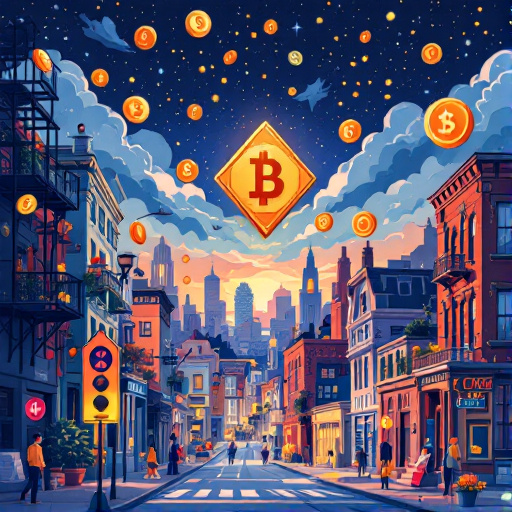
Cryptocurrency gentrification is transforming local economies and individual wealth dynamics in an increasingly digital world. This phenomenon not only reshapes neighborhoods but also introduces new opportunities and challenges for residents of all ages.
What is Cryptocurrency Gentrification?
Imagine walking down your favorite street and finding artisanal coffee shops, vegan eateries, and pop-up crypto boutiques instead of the familiar family-owned stores. Welcome to cryptocurrency gentrification—a term that encapsulates the impact of digital currencies on local communities and individuals’ financial landscapes. While gentrification traditionally refers to the demographic and economic displacement in urban neighborhoods, in this case, it involves the adoption of cryptocurrencies and blockchain technology influencing local economies.
The Digital Gold Rush
As digital currencies gained prominence, the excitement around them spurred a gold rush-like mentality. People flocked to neighborhoods deemed ‘crypto-friendly,’ sparking a wave of new businesses catering to the burgeoning community of traders and investors. In 2020 alone, the number of Bitcoin ATMs in the U.S. surged to over 13,000, making it immensely easier for people to engage with crypto (CoinATMRadar). This serves as a tangible indicator of changing spending habits and priorities.
Statistics That Matter
Consider this: A study conducted by the blockchain consulting firm Chainalysis found that the U.S. received about $4 billion in crypto investments in 2020. Moreover, the percentage of Americans who owned cryptocurrency jumped from 1% in 2013 to 16% by 2021, illustrating increasing acceptance and integration of digital currencies into everyday life (Pew Research).
The Local Impact
Living in a neighborhood that embraces cryptocurrency can feel like being part of an exclusive club. While some local businesses thrive by accepting Bitcoin, others face challenges, particularly those slow to adapt to this digital wave. Let’s explore a case study in Austin, Texas. Known as a tech hub, the city has seen a rise in shops accepting cryptocurrencies—from food trucks to luxury boutiques—catering to new customers who prefer digital transactions.
However, the digital gold rush isn't without complications. For long-standing businesses, particularly in historically disenfranchised communities, a focus on attracting crypto investors can lead to rising rents and property values. As affluent tech enthusiasts increase neighborhood desirability, local residents may find themselves unable to afford their homes, leading to displacement much like traditional gentrification.
Unpacking Personal Wealth Transformation
Consider Sarah, a 27-year-old graphic designer who invested in Ethereum in 2016 when it was priced at just $10. Fast forward to 2021, and she finds herself with a small fortune as crypto soared to over $4,000. Sarah used her newfound wealth to buy a home in her local neighborhood, sparking envy and aspiration among her peers. But at what cost? As Sarah moves into her new home, the neighborhood property values inflate, potentially pushing out families who have lived there for generations.
Middle-Class Crypto Investors or Digital Nomad Rockstars?
The cryptocurrency sphere often paints a picture of the ‘digital nomad’ lifestyle—young, free-spirited individuals living off their investments while traveling the globe. Yet, the reality is that the demographic is more diverse. Older populations are increasingly entering the crypto scene; as of 2021, 8% of investors aged 55 and older owned digital currency, up from 3% just two years prior (Grayscale). This broadening window of opportunity leads to greater integration of various communities into the cryptocurrency marketplace.
A Cautionary Note
It’s essential to address the glaring risks associated with such investments. Cryptocurrency is, by nature, volatile. The average Bitcoin price changed approximately 380% from 2013 to 2021, indicating a high degree of risk (CoinMarketCap). Prospective investors should recognize that what goes up can come crashing down, posing potential threats to personal wealth and community stability.
Racial and Economic Implications
The narrative of cryptocurrency gentrification isn't merely about economics; it also involves social justice. A study from the Brookings Institution revealed that while one in five Black Americans owned cryptocurrencies, disparities persisted in terms of wealth generated compared to their white counterparts. As Bitcoin and altcoins shift wealth into the hands of a few, we must critically examine who benefits most in these burgeoning economies.
Investing Local: Communities Leveraging Cryptocurrency
Some neighborhoods proactively use cryptocurrency to strengthen community ties and drive local economies. For example, community investment schemes have emerged in several cities, wherein residents can buy "local tokens" to support their immediate area, thereby fostering a sense of community ownership. In 2021, the "Riot Blockchain" community in Los Angeles worked with local artists to deploy blockchain projects celebrating the neighborhood’s history, creating not only currency but community identity.
Real-World Examples and Innovations
Take a peek at the innovative "Pineapple Fund," set up by an anonymous Bitcoin millionaire in 2017, who pledged to give away 5,057 Bitcoins (worth roughly $86 million at the time) to various charitable organizations. This initiative painted a new narrative for wealthy crypto investors—one focused on giving back to communities and supporting meaningful causes. Such actions can help counterbalance the darker ramifications of cryptocurrency gentrification and draw attention to the positive dimensions of wealth redistribution.
The Dilemma of Regulation
As neighborhoods adapt to the influx of crypto investments, governments grapple with how to regulate these transactions without stifling innovation. Countries like El Salvador have taken steps toward adopting Bitcoin as legal tender, while others express caution, emphasizing the need for clear guidelines. The tension between fostering innovation and protecting local economies is palpable.
Additionally, legislators face the task of implementing policies that mitigate the adverse effects of cryptocurrency gentrification—strategies that prevent local residents from being priced out of their own neighborhoods. Solutions may include rent control measures, homeownership assistance, and localized tax incentives for businesses committed to community sustainment.
Embracing Change: Strategies for Residents
So, how can current residents adapt to this shift? A good start is cultivating awareness and education about cryptocurrencies. Workshops hosted by local community centers, financial institutions, or even friendly neighborhood Bitcoin enthusiasts can empower residents to understand and engage in this evolving landscape. Similar to the emergence of the internet in the late ’90s, knowledge is not just power; it’s economic leverage.
Community Investment for Equity
One potential strategy could involve community investment funds that pool resources from neighborhood residents for local businesses or shared projects. Similar to a ‘community co-op,’ such networks could foster economic self-sufficiency, reduce dependency on external speculators, and combat the adverse effects of gentrification infused by cryptocurrency adoption.
Conclusion: The Future of Crypto and Communities
Cryptocurrency gentrification reflects the complexities and contradictions of our rapidly evolving economic landscape. As digital currencies become intertwined with everyday financial transactions and local communities, residents need to understand the repercussions, seize opportunities, and stabilize their neighborhoods. Ultimately, the challenge lies not just in navigating a new financial frontier, but in doing so in a manner that is equitable and sustainable for all community members.
As we move forward, it remains crucial to foster a balanced relationship between innovation and community integrity. Like any burgeoning trend, cryptocurrency gentrification poses both risks and rewards, and it's up to us—collectively—to chart a course that enriches lives and preserves the character of our neighborhoods. Whether you’re an investor, a local business owner, or simply someone whose heart resides within your community, the voice of every stakeholder holds the potential to steer this digital revolution toward inclusivity—and together, we can navigate a future where everyone thrives.
Related Articles